


By Basil Odilim
Ordinarily, I would have minded my business. My history with Nasir Ahmad El-Rufai is not without bruises. But fairness—both to him and to my pen—compels me to write with restraint and balance.
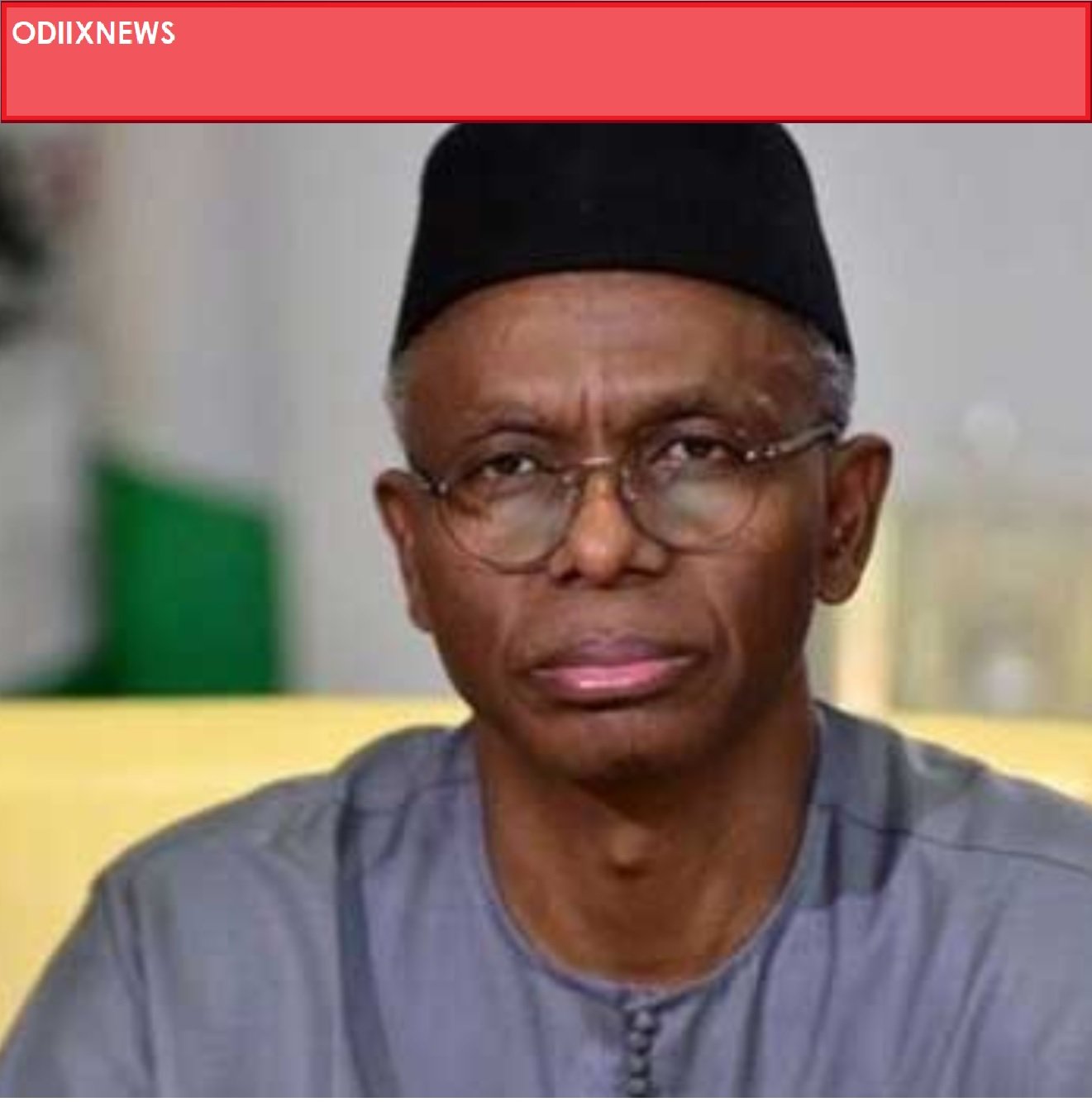
El-Rufai is one of the most controversial and intellectually formidable figures of Nigeria’s Fourth Republic. Agree with him or not, ignore him you cannot. He relishes confrontation, thrives in turbulence, and rarely retreats from a fight. That is why I describe him as Nigeria’s political honey badger—unyielding, strategic, and often unpredictable.
Early Encounters
We first met in 2006 when Matthew Hassan Kukah introduced me to him during his tenure as FCT Minister under President Olusegun Obasanjo. I presented my Diaspora Villa concept. When the idea later surfaced publicly as a government initiative, I went on Nigerian Television Authority to clarify ownership.
It was a tense moment. El-Rufai appeared surprised that anyone would openly challenge a sitting minister closely associated at the time with Nuhu Ribadu. Attempts at reconciliation followed. Oby Ezekwesili tried to bridge the divide before departing to serve at the World Bank. We spoke—but ultimately agreed to disagree.
In 2008, we crossed paths again at the Harvard Kennedy School while he was pursuing his MPA. At the time, I was at Massachusetts Institute of Technology working on a book project. There was mutual intellectual respect. But respect does not always produce alignment.
Years later, in 2017, we met at his Maitama residence and later in Kaduna, where I presented an e-automobile identification proposal. Despite the intervention of his long-time associate Jimi Lawal, collaboration again proved elusive.
The 2015 Northern Realignment
To understand El-Rufai’s enduring influence, one must examine the political earthquake preceding the 2015 elections.
Led by El-Rufai and joined by Atiku Abubakar, Rabiu Musa Kwankwaso, and the then suspended Central Bank Governor Sanusi Lamido Sanusi—who would later become Emir of Kano—a coalition within sections of the northern elite consolidated around the belief that the presidency should revert to the North after the tenure of Goodluck Jonathan.
The argument was framed in terms of zoning and federal balance, referencing Nigeria’s informal rotational understanding of power. The movement gathered additional momentum when former President Olusegun Obasanjo publicly distanced himself from Jonathan’s re-election bid.
Whether one interprets this alignment as democratic coalition-building or elite power recalibration depends on perspective. What is undeniable is that it altered Nigeria’s political trajectory and paved the way for the 2015 transition.
Rhetoric, Resistance, and Reform Battles
During the 2019 elections, in which President Muhammadu Buhari faced Atiku Abubakar, El-Rufai issued remarks warning foreign election observers against undue interference. Critics described the language as excessive; supporters framed it as a defense of sovereignty.
In early 2023, he emerged again at the center of national confrontation. As the naira redesign policy under Godwin Emefiele triggered severe cash shortages, several governors challenged the federal government at the Supreme Court of Nigeria. El-Rufai was among the most vocal. The March 3, 2023 judgment halted aspects of the implementation and eased the nationwide crisis.
For many Nigerians, that episode reinforced his image as a political actor willing to confront even his own party’s federal leadership when necessary.
The Kaduna Question
His tenure as governor remains debated. Admirers cite fiscal restructuring and administrative reforms. Critics point to the tragic violence in Southern Kaduna, where numerous communities suffered deadly attacks. The state government maintained that security agencies were federally controlled, limiting state authority. Nonetheless, the moral and political implications of those years remain part of his complex legacy.
The Intelligence Gambit
Most recently, El-Rufai has made serious allegations concerning the office of the National Security Adviser, currently headed by Nuhu Ribadu. Claims involving national security—particularly those touching on intelligence operations or the importation of sensitive materials—move political disputes into a far more consequential domain.
Allegations of this magnitude demand institutional scrutiny and credible evidence. In environments where transparency around security matters is limited, such disputes often unfold in the court of public opinion before they reach formal resolution.
Could this be his Waterloo? History advises caution before making that judgment.
El-Rufai has repeatedly entered confrontations that appeared career-ending. Yet he has demonstrated a pattern: confrontation, recalibration, survival. However, this terrain is different. When political conflict intersects with intelligence institutions, outcomes depend less on personality and more on documentation, alliances, and institutional response.
If evidence substantiates his claims, this episode may be remembered as principled defiance. If not, it may be judged as overreach in a season of political estrangement.
For now, it remains an unfolding test—not merely of one man’s resilience, but of Nigeria’s institutional maturity.
The Paradox
El-Rufai is neither caricature nor cliché. He is brilliant, sharp, deeply read, and globally networked. President Bola Tinubu undoubtedly understands that such networks and influence matter in contemporary power calculations. He also remembers the decisive role El-Rufai played in the coalition that reshaped Nigeria’s electoral map—and the capacity he retains to influence future alignments.
He provokes loyalty and resistance in equal measure. He unsettles opponents and sometimes allies. He disrupts equilibrium.
You may disagree with him. You may challenge his methods. You may question his legacy. But you cannot pretend he does not matter.
The honey badger metaphor captures his audacity—but not his vulnerability. Resilience is not immunity. Boldness is not invincibility. In Nigeria’s fluid political terrain, survival is never guaranteed.
For now, this is not Waterloo. It is simply another chapter in a long career defined by confrontation. In that arena, Mallam El-Rufai has rarely chosen silence.